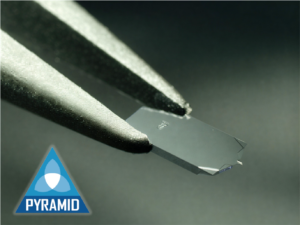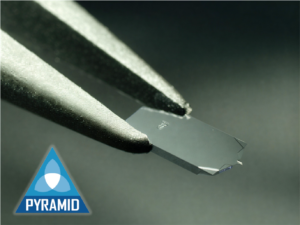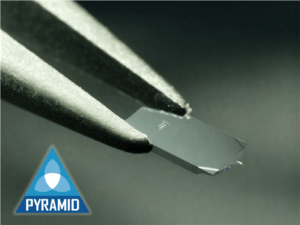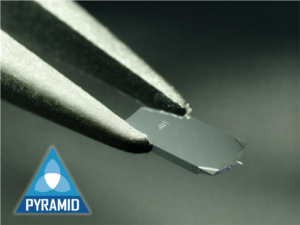

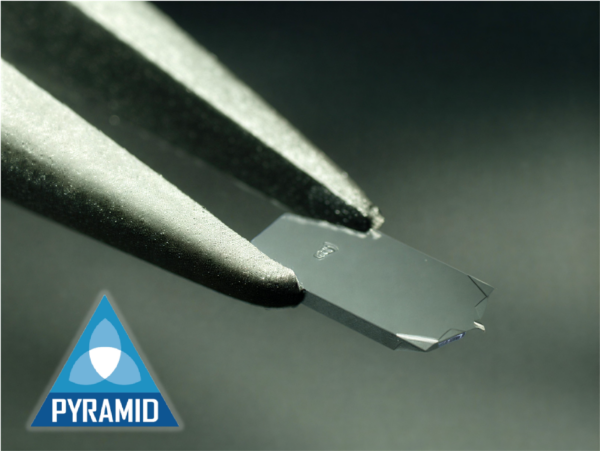
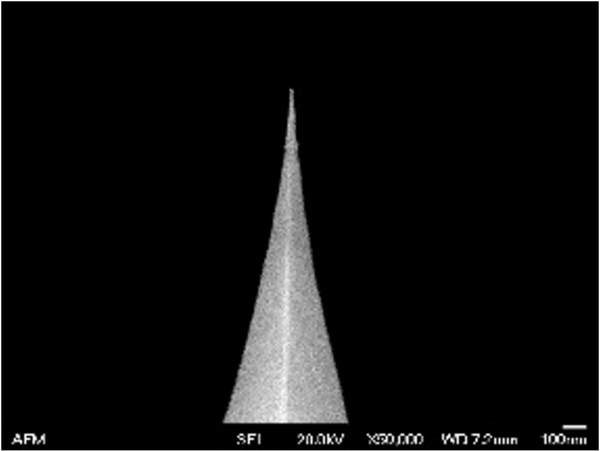
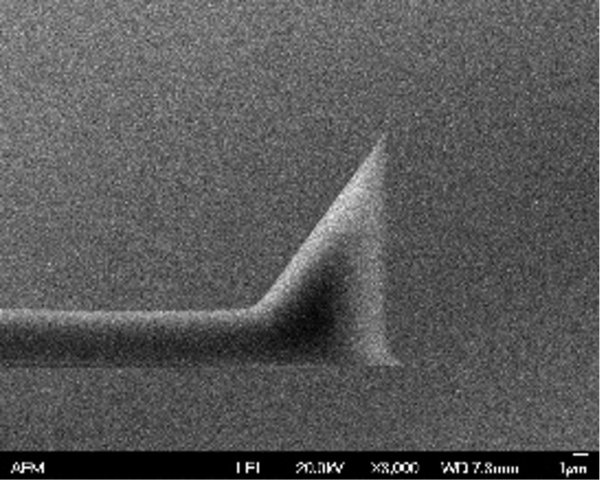
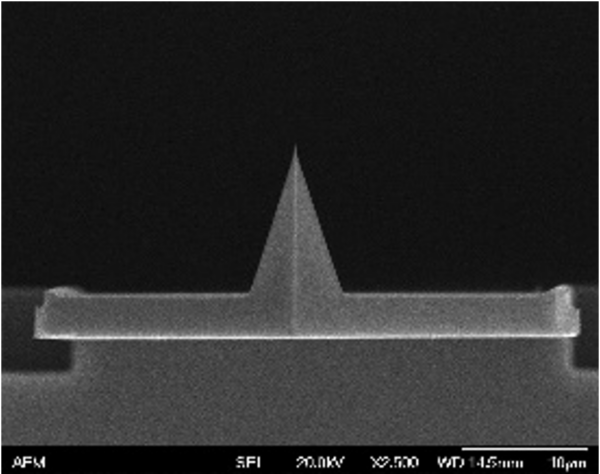
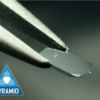
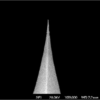
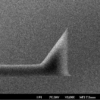
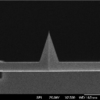
This probe model features a gold (Au) reflective coating on the reflex side of the cantilever, designed to enhance optical detection performance while maintaining the high-resolution capabilities of the tetrahedral probe design.
Gold-coated probes can offer advantages in certain experimental conditions:
• Improved optical reflectivity for stable laser detection signals
• Enhanced resistance to oxidation compared with aluminium coatings
• Better compatibility with liquid or biological environments
• Stable coating performance in chemically sensitive experiments
Key Features
Point-Terminated Tip for High-Resolution Imaging
The tetrahedral probe geometry provides a consistently sharp, point-terminated tip. The apex is further sharpened over more than 1 µm, enabling high-resolution surface imaging.
TipView Alignment Structure
The probe is positioned at the very end of the cantilever, ensuring the tip apex remains fully visible under an optical microscope for accurate positioning.
Low-Resistivity n-Type Doped Silicon
The cantilever is fabricated from n-type doped silicon with very low resistivity (0.01–0.02 Ω·cm). This significantly improves electrical conductivity and allows the probe to be used for electrical measurements such as surface potential mapping and other conductive AFM applications.
Gold/Chromium Reflective Coating
The reflex side of the cantilever is coated with gold-chromium to provide high optical reflectivity for the AFM laser detection system. Gold coatings offer improved chemical stability compared with conventional aluminium coatings and can provide enhanced performance in specialised environments